
I get some version of this question in almost every kickoff meeting. Someone on the call, often a detail-oriented leader, asks how Everything DiSC® is different from Myers-Briggs. Fair question. It’s the most common one I hear.
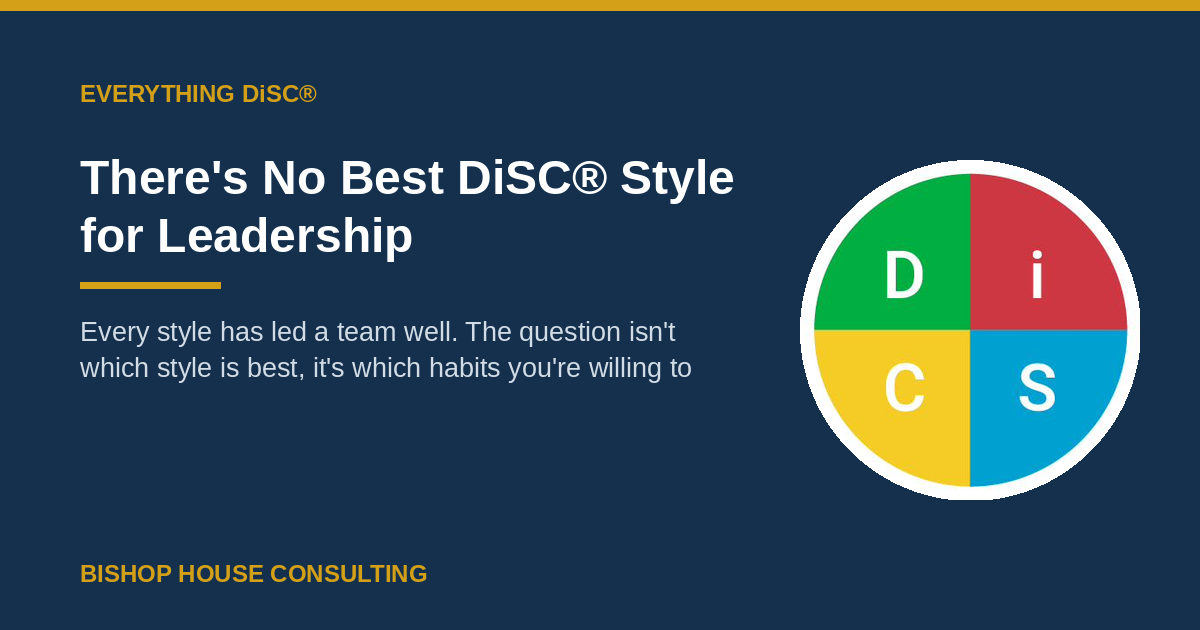
Here’s the difference that actually matters. Personality tests like MBTI sort people into fixed types based on how they’re wired. Everything DiSC measures behavior along two continuous dimensions: how fast-paced or cautious you tend to be, and how skeptical or accepting you tend to be. That’s it. Two axes, four quadrants, twelve blended styles. It’s not asking who you are at your core. It’s asking how you tend to show up at work and in life.
That distinction changes everything about how useful the tool is. A personality type doesn’t move. Once you’re an INTJ, you’re an INTJ. But a DiSC style is a tendency, not a life sentence. I’ve watched a High D executive learn to slow down and ask more questions before a big decision. I’ve watched a High S team lead learn to speak up in a room full of louder voices. Neither of them stopped being who they are. They just expanded the range of behaviors available to them, which is the entire point.
The other piece people don’t realize: Everything DiSC isn’t a weekend personality quiz. It’s a scientifically validated, computer-adaptive assessment with nearly 50 years of research behind it, and it holds up under scrutiny. The assessment reports a 90% perceived accuracy rating and test-retest reliability between .85 and .88, which is strong for a behavioral instrument. That’s not marketing copy. That’s the kind of number that matters if you’re the person who has to defend the investment to your leadership team.
So no, it’s not just another personality test. It’s a behavioral map with real data behind it, built specifically to help people work better together, not to label them and move on.
If you’re evaluating DiSC for your team and want the honest version of how it compares to other tools you’ve used, that’s exactly the kind of conversation I like having. Reach out and let’s talk through what would actually fit your team.