
by Michael Holland –
Leadership teams often get stuck. Not on strategy. Not on resources. They were stuck on each other.
The VP of Sales thinks the CFO is being obstructionist. The CFO thinks the VP of Sales was reckless. They’d both worked at the company for years, genuinely respected each other’s capabilities, but their working relationship had deteriorated into something that felt personal.
During an Everything DiSC® workshop, something shifted. The VP of Sales looked at her DiSC profile, then looked at the CFO’s, and said: “You’re not trying to block me. You need time to run the numbers because that’s how you protect the company.” The CFO nodded slowly. “And you’re not being impulsive. You see market opportunities faster than I do, and you want us to move before we miss them.”
Nobody had changed. The work styles were the same as they’d been for years. But now they had language for what was happening between them.
Why Organizations Keep Choosing DiSC
Over nearly 50 years, more than 45 million people have completed DiSC assessments. That’s not because it’s trendy or because someone’s great at marketing. It’s because DiSC works in ways that stick.
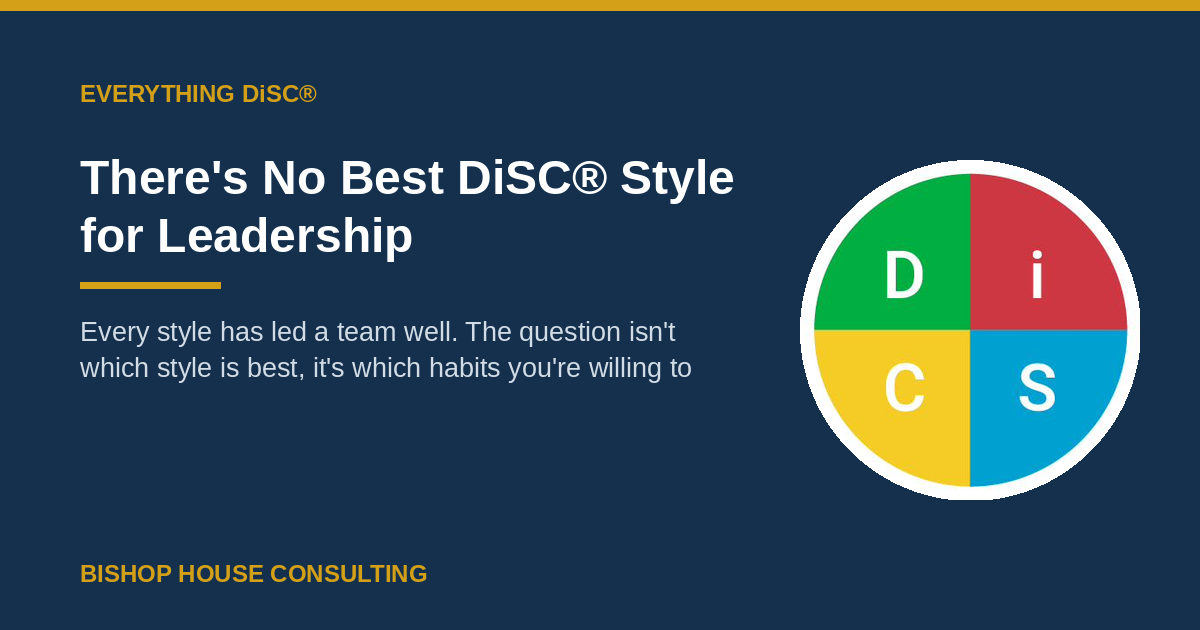
Here’s what makes it different: DiSC doesn’t try to put you in a box. It doesn’t label you as one type of person. Instead, it maps out your natural behavioral tendencies on a continuum of how you show up at work, how you prefer to communicate, what drives you, what stresses you out. It’s descriptive, not prescriptive.
And here’s the thing, when you understand your own style and can recognize others’ styles, you stop taking differences personally. That VP of Sales wasn’t being blocked by the CFO’s cautious nature; she was being protected by it. The CFO wasn’t being pushed by the VP of Sales’s urgency; he was being energized by her vision.
What This Means for Your Organization
If you’re in HR or L&D and you’re reading this, you’ve probably tried other assessments. Maybe they gathered dust after the initial excitement wore off. Maybe people took them, nodded politely, and went right back to their old patterns.
DiSC is different because it gives people something they can actually use on Monday morning. The profile isn’t theoretical, it’s practical. And when you add the Catalyst platform, your people can pull up tips for working with a specific colleague before they walk into a difficult conversation.
We’ve seen teams transform their meeting dynamics within weeks. We’ve watched conflicts that had been festering for months resolve themselves once people understood they weren’t dealing with difficult personalities, they were dealing with different styles.
At one healthcare client, managers told us their one-on-one meetings with direct reports became more productive because they finally understood how to communicate expectations in ways each person could actually hear them.
Getting Started
Start small. Pick a team that’s struggling or a leadership group that’s open to growth. Run the assessments. Bring in someone who knows how to facilitate the conversation—because the assessment is just the beginning. The real work happens when you help people connect the dots between their DiSC style and their daily interactions.
If you’re ready to give your teams the language they’ve been missing, let’s talk.
Coaching Thoughts – For You and Your Peers
- Think about a relationship at work that feels harder than it should be. What if the difficulty isn’t about the person, what if it’s about style?
- Look at your leadership team. Do they have a shared language for talking about differences, or do they just label people as “difficult”?
- What would change in your organization if people could name their communication preferences without judgment?